
The Whole Health Project
For Therapists, Coaches, Yoga Teachers and Facilitators Wanting to Learn How to Invite the Wisdom of the Body Into Their Sessions
Trauma-Aware Somatic Foundations Facilitation Training
A 12 Week Capsule That Translates Somatic Facilitation Into Practical, Trauma-Aware Tools You Can Use With Clients From Day One
This Training Is
A body-based facilitation training rooted in trauma awareness, designed to help you hold steadier containers - even when a client’s (or your own) system is activated.
A practice of deep presence: learning to sense the body before the narrative takes over, to stay steady when activation arises, and to support integration with subtlety and discernment.
A progressive journey of theory, personal practice, live Q&A sessions and guided reflection — designed to build embodied confidence from week one.
A framework you can weave into any modality: coaching, therapy, breathwork, energy work, group work, and one-on-one sessions.
A sustainable foundation (not a burnout amplifier): with tools that support your nervous system as much as your client’s, and help you protect your energetic boundaries.
This Training Is Not
A clinical or psychotherapeutic certification. (It’s not designed to replace therapy or pathological diagnosis.)
A licence to push clients into intense emotional release or catharsis.
A fixed, dogmatic system that demands you follow one formula. (It adapts to who your client is in the moment.)
A shortcut or magic wand. Deep somatic work requires patience, presence, and consistency.
A teaching that expects you to sacrifice your own nervous system in service of others.
A Facilitation That Shows You How To Confidently Work With The Wisdom Of The Body

Somatic Facilitation isn’t limited to a single practice or setting. It’s a body-based approach founded on the principle that the body holds its own wisdom for healing — and our role as facilitators is to support clients to safely reconnect with that innate intelligence.
As simple as this may sound, this approach is still considered radical in a head-based wellness culture — one that often prioritises story-looping, cognitive understanding, and event analysis, keeping clients disconnected from their bodies and stuck in their minds.
Somatic tools are needed:
in the middle of a therapy session when words aren’t landing
in a coaching call when a client circles the same loop for the third time
in a yoga class when you sense someone physically present but disconnected
in an online group when the collective energy spikes and you need to bring everyone back down
Embodying and offering Somatic Facilitation isn’t about replacing what you already do. It’s about weaving body-based awareness and process into the spaces you’re already holding, so that your clients experience long lasting and empowered change.
The Investment
One Time Payment
$1299
3 Month payment plan
$477/m
6 month payment plan
$249/m
A Letter From Your Facilitators
Dear friend,
We know what it feels like to sit across from someone in pain and want to help, but not be sure you have the right tools to let the body lead. Maybe you’ve been there too: a client dissociates mid-session, someone’s tears take you by surprise, or you sense trauma living in the body but don’t know how to meet it without making things worse.
We also know the quiet self-doubt afterwards: Should I have said less? Done more? Found a safer way to hold this?
You’re not alone. So many therapists, coaches, and practitioners care deeply, but were never given trauma-aware, body-based frameworks to help clients build a safer relationship with their bodies. Traditional trainings often focus on the mind or technique, leaving out the nervous system — the very place where trauma lives.
That’s why we created the Somatic Foundations Facilitation Training.
Most somatic training falls into one of two camps: either years-long, theory-heavy programmes that still don’t show you what to do with a real person in front of you — or short intensives that push for big breakthroughs by overriding capacity and calling it “healing.”
Our approach is trauma-aware, body-based, and focused on integration, not catharsis. We don’t chase extreme emotional releases. Instead, we teach you to notice the subtle cues and quiet shifts of the body — and to pause, listen, and guide in a way that honours each client’s capacity. That’s what builds safety, trust, and transformation that lasts.
We designed this 12-week container for practitioners ready to move beyond talk and theory and feel confident working with the body in ways that are safe, ethical, and deeply healing — not by adding another shiny tool, but by learning how to meet clients when words aren’t enough.
And for this cohort, we’re also honoured to include a special additional guest module taught by Juel McNeilly:
“Ethical Space Holding – Exploring the Veil: Race, the Body, and Ethical Presence.”
This module offers a somatic exploration of where racial bias and the impacts of systemic racism live in the body. It is for white-bodied and BIPOC facilitators, and is adapted to ensure the work is relevant, appropriate, and as safe as possible for all participants.
You can read more about Juel’s work, their approach, and why they’ve chosen to offer this work here.
Ethical Space Holding is also available as a standalone course. Find out more here.
With love,
Rachel & Lucy
What to Expect Inside
the Somatic Foundations Facilitation Training
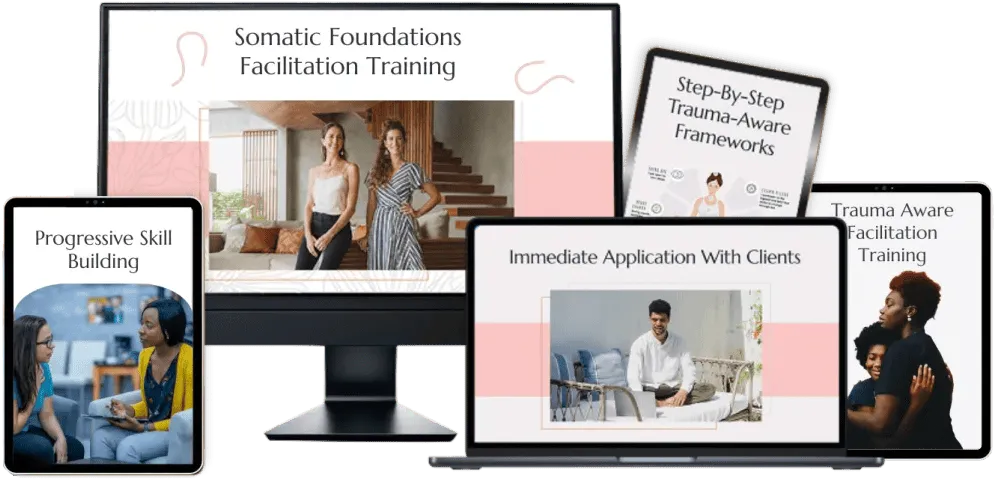
✨ Embodied Learning, Not Just Theory
Every module combines short, digestible teachings with guided somatic practices you’ll actually feel in your own body. You won’t just understand the concepts, you’ll live them.

✨ Step-by-Step Trauma-Aware Frameworks
You’ll receive clear, practical structures for guiding clients through somatic tools without fear of “getting it wrong” or causing harm.
✨ Progressive Skill Building
The training unfolds like a ladder, starting with foundational practices, then layering in more depth and nuance each week, so your confidence grows naturally and steadily.
✨ Live Support + Community Connection
You won’t be on this path alone. Expect weekly live Q&As with Rachel & Lucy during the beta round, a private practitioner community, and the chance to ask questions, share wins, and get real feedback.
✨ Immediate Application With Clients
You’ll walk away with practices you can use right away. Simple, safe, and ethical tools that work across contexts: therapy sessions, coaching, yoga, or group facilitation.
✨ A Personal Shift, Too
The training is designed to support you as much as your clients. Expect to feel calmer, more grounded, and more resilient in your own nervous system as you practice.
Bonus
✨ 10-hour Trauma Aware Facilitation Training (Value: $120)
This is one of our most popular training and is included for you to begin as soon as you sign up.
You can find out more about this training here.
Limited Time Beta Round Pricing
Beta Round Pricing
(Oct 23 - Nov 5)
Payment in full
$999
3 month payment plan
$366
6 month payment plan
$191
Regular Pricing
Payment in full
$1500
What Practitioners Say About Learning With Us


Social Entrepreneur Founder of Infinite Flow Dance
“This course has changed my life. When I was looking for coaches and programs for breathwork, my main focus was to find a system and set of teachers/coaches who exuded mindfulness, calming energy, and could speak to the power of breath not just from a holistic/spiritual level. When I came across Rachel and Lucy, The Whole Health Project, I knew this was the right place. This course has so much wonderful information and they provide wonderful guidance on how to not only master breath awareness within yourself but also be able to facilitate this process for others. Also, the bonus modules were absolutely empowering as a new business owner. Thank you, Thank you! Namaste.


Personal Trainer
WOW! I really loved this course as I am a personal trainer it is great to be able to use the breath when taking people through movements in the gym. I love how movement supports our breath, which in turn supports our energy when in a meditative state and allows us to connect to ourselves and connect to source.


Coach
"I feel confident to teach others after this course, which is not always an easy thing to come by with teacher trainings. I highly recommend studying under this legendary duo, I'm soooo happy I did!"
These testimonials are from our other trainings until our current cohort graduate from our first round of the training.
The SAFER Approach to Somatic Facilitation
A grounded framework for working with bodies, not just minds.
We don't promise "safe spaces.” As we don't get to determine what is safe for someone else. But we do teach you how to create conditions where both you and your client can feel safer. More attuned, more present, more able to stay with what's actually happening.
That's what guides everything we teach.
S
Structure that holds without forcing
Learn to guide a session from start to finish without rigid scripts or chasing outcomes. Simple frameworks that create containment and allow flexibility, so you know what to do, but never override what's emerging.
A
Attunement over agenda
This work follows the nervous system's lead. You'll learn to track your client's cues, slow down when needed, and stay in connection—responding to what's actually happening rather than what you planned.
F
Facilitation, not fixing
You're not here to "heal" anyone. Learn to support without rescuing, over-efforting, or absorbing their experience. Less pressure. More presence
E
Embodied practitioner presence
Your nervous system matters as much as your client's. Build your own regulation, refine your internal tracking, learn to hold space without losing yourself.
R
Real-life integration
We're not chasing big breakthroughs. Help clients translate somatic shifts into everyday life, because change doesn't stick unless it lives beyond the session.
You'll have a clear, ethical way to guide somatic work.
Not just techniques—real capacity, skill, and confidence.
Why Trauma-Aware Facilitation Matters

Trauma lives in the body. Without somatic tools, clients keep looping in the same nervous system patterns no matter how much they “understand” the problem.
Unsafe guidance causes harm. The wrong cue, a push too far, or missing body signals can retraumatize a client in seconds.
Safety creates results. Lasting change only happens when clients feel grounded and protected in your presence.
Techniques aren’t enough. Collecting practices won’t stop the freeze when someone dissociates, trauma-aware scaffolding will.
Leadership is responsibility. Your role isn’t to impress. It’s to hold space so others feel safe enough to heal.
This is your edge. In a field crowded with dabblers, trauma-awareness is the mark of a professional clients trust and return to.
Meet Your Facilitators
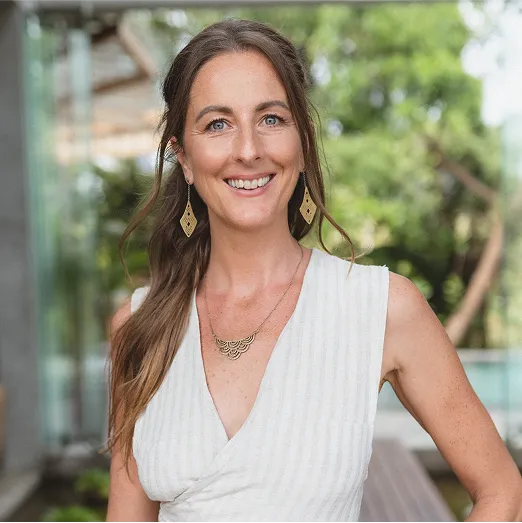

Rachel spent the first decade of her career racing boats around the world until burnout led her to ask a deeper question: what does the body need to heal? That question shifted her path from high-performance sport to somatic, breathwork, and trauma-aware practices, and eventually to founding The Pineapple House, a yoga and surf retreat centre in Bali.
Through her own recovery, Rachel came to understand somatic work as a lived, embodied process — not a concept. She has studied Breathwork, Yin Yoga, somatics, Ayurveda, and meditation with teachers including Dan Brulé and Stig Severinsen.
Today, Rachel blends somatic and psychosomatic practices, trauma-aware breathwork, tapping, and nervous system repair to support people to feel safe, grounded, and connected in their bodies. She co-founded The Whole Health Project with Lucy Foster-Perkins and lives in Bali with her daughter.
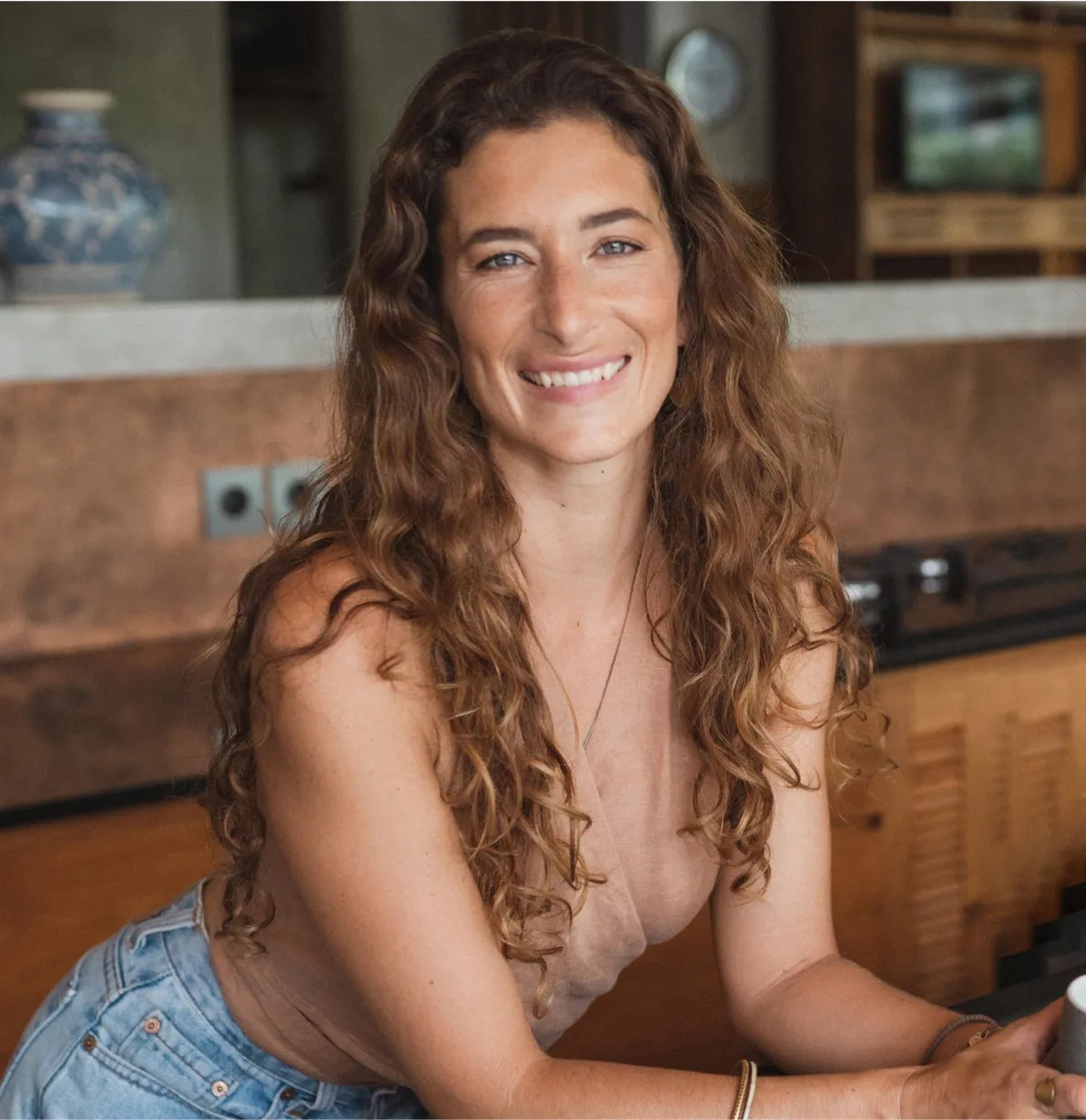

Lucy began her career as a professional dancer, developing a deep relationship with movement, sensation, and physical expression — alongside a learned tendency to push beyond her limits.
After experiencing adrenal fatigue in 2014, Lucy was forced to slow down and rebuild her relationship with her body through Yin Yoga, breathwork, meditation, and nervous system awareness. This shift reshaped both her health and her approach to facilitation.
Lucy has since deepened her study in trauma-aware breathwork and meditation, including with her primary teacher Rupert Spira. Her work blends embodied precision, curiosity, and care. She co-founded The Whole Health Project with Rachel and lives in London with her family.
The Investment
One Time Payment
$1299
3 Month payment plan
$477/m
6 month payment plan
$249/m
Course Modules
Each module includes theory, personal practices and teaching practice tasks. This is a key component to this training to ensure you have plenty of time to both embody a deeper connection with your body and build your facilitation tool kit and confidence.
Below is a brief overview (but not all material covered) in each module, excluding the practices and teaching tasks for each week.

Module 1
Foundations & Philosophy
An introduction to Somatics and why this approach is so radical compared to “traditional” therapies and the catharsis module. This module begins to lay the foundations of somatic process, underpinned by our SAFER methodology.
This module covers Limbic Resonance, the Nervous System, the 4 The Layers of Experience and the Five Somatic Pathways and more.
Module 1 : Foundations & Philosophy
An introduction to Somatics and why this approach is so radical compared to “traditional” therapies and the catharsis module. This module begins to lay the foundations of somatic process, underpinned by our SAFER methodology.
This module covers Limbic Resonance, the Nervous System, the 4 The Layers of Experience and the Five Somatic Pathways and more.
Module 2 : Facilitation Fundamentals
Module 2 continues to build the foundation of safe Somatic Work by exploring Ethical Space Holding, Empathetic Witnessing, Reflective and Active Listening, Somatic Facilitation Guidelines, Titration & Pendulation and Creating Safety in Sessions .
Module 3 : Understanding the Somatic Landscape & Processing Styles
Module 3 continues to develop presence, witnessing and observation by understanding the Ego in Somatic Work. We explore Understanding Resistance, Triggers and Unprocessed Experiences and the Three Stages of Witnessing to deepen your observation and facilitation tools.
Module 4 : The Unshaming Path & Creating Space
This module explores how we feel truly seen rather than diagnosed, when our experience is met with curiosity rather than judgment. The module looks at Shame vs. The Unshaming Path in a Trauma-Informed Practice.
Module 5 : Expanding Somatic Capacity
Now the foundation is laid we move from Observation to Invitation - a crucial step for the somatic process. We also explore what it means to work with capacity and truly understand the Somatic Facilitation Guidelines.
Module 6 : From Story to Body
Module 6 explores the Therapeutic Relationship between you and your client. We look at Co-Sensing, Creating Safety Through Informed Consent, Bridging Narrative and Sensation, The Intelligence of Impulse and more.
Module 7 : The Breath
Although we are not training you to be a breath coach it’s important you have a strong understanding of how to work with the Breath in a Somatic Way so that it becomes a tool that you can use with confidence while staying in your scope of competence.
Module 8 : Energetic Ranges & Resourcing
This week is about amplifying Somatic Intelligence and developing our perception and Somatic Movement.
Module 9 : Tapping & Touch
An Introduction to and practical application of Point-Based Regulation, tapping and somatic touch.
Module 10 : Sacred Fire
This module is all about the wisdom and misunderstanding of anger; The Cultural Lie About Anger, Context and Conditioning.
Module 11 : Parts Work & Shadow Work
An introduction and practical use of Parts Work and Shadow - how they’re helpful and how and when to include them in your somatic facilitation.
Module 12 : Psychosomatics
An introduction to how the body and mind are connected in terms of illness and physical connection.
Module 2
Facilitation Fundamentals
Module 2 continues to build the foundation of safe Somatic Work by exploring Ethical Space Holding, Empathetic Witnessing, Reflective and Active Listening, Somatic Facilitation Guidelines, Titration & Pendulation and Creating Safety in Sessions .

Module 3
Understanding the Somatic Landscape & Processing Styles
Module 3 continues to develop presence, witnessing and observation by understanding the Ego in Somatic Work. We explore Understanding Resistance, Triggers and Unprocessed Experiences and the Three Stages of Witnessing to deepen your observation and facilitation tools.

Module 4
The Unshaming Path & Creating Space
This module explores how we feel truly seen rather than diagnosed, when our experience is met with curiosity rather than judgment. The module looks at Shame vs. The Unshaming Path in a Trauma-Informed Practice.
Module 5
Expanding Somatic Capacity
Now the foundation is laid we move from Observation to Invitation - a crucial step for the somatic process. We also explore what it means to work with capacity and truly understand the Somatic Facilitation Guidelines.
Module 6
From Story to Body
Module 6 explores the Therapeutic Relationship between you and your client. We look at Co-Sensing, Creating Safety Through Informed Consent, Bridging Narrative and Sensation, The Intelligence of Impulse and more.
Module 7
The Breath
Although we are not training you to be a breath coach it’s important you have a strong understanding of how to work with the Breath in a Somatic Way so that it becomes a tool that you can use with confidence while staying in your scope of competence.
Module 8
Energetic Ranges & Resourcing
This week is about amplifying Somatic Intelligence and developing our perception and Somatic Movement.

Module 9
Tapping & Touch
An Introduction to and practical application of Point-Based Regulation, tapping and somatic touch.
Module 10
Sacred Fire
This module is all about the wisdom and misunderstanding of anger; The Cultural Lie About Anger, Context and Conditioning.
Module 11
Parts Work & Shadow Work
An introduction and practical use of Parts Work and Shadow - how they’re helpful and how and when to include them in your somatic facilitation.
Module 12
Psychosomatics
An introduction to how the body and mind are connected in terms of illness and physical connection.
Essential Questions Answered
Do I need previous somatic or trauma training to join?
No. This training was designed to meet you exactly where you are. You’ll learn the foundations step by step, from body-based tools to trauma-aware facilitation, so you build both confidence and competence without overwhelm.
How is this different from other yoga, meditation, or breath trainings I’ve seen?
Most trainings skim the surface: teaching techniques without the trauma-aware scaffolding to use them safely. Here, every practice is taught with adaptations, safety cues, and boundaries, so you can guide others without fear of causing harm.
Will this make me a certified somatic therapist?
No. This is not a therapy certification. It’s a facilitation training equipping you with ethical, trauma-aware somatic tools you can integrate into coaching, yoga, counselling or teaching.
What if I’ve already studied somatics before?
Perfect. Many students come in with prior exposure but leave with a deeper, structured understanding, plus the confidence to actually use the practices with clients rather than just keeping them as personal tools.
How much time will this training take each week?
Expect 2–4 hours per week over 12 weeks. The content is a mix of live online and pre-recorded. It's deliberately digestible, so you can learn at your own pace, and you’ll keep lifetime access to revisit anytime.
Is this really worth the investment?
Ask yourself this: what is the cost of sitting in front of a client, feeling unprepared, unsafe, or unable to help? This training ensures you never have to say “I don’t know what to do” again. You’ll walk away with tools that deepen your impact, expand your credibility, and create safer spaces for every client you serve.
©2025 The Whole Health Project | Terms & Conditions | Privacy Policy | Contact Us